
NOTES FOR STARTING A WHOLESALE CUT FLOWER PROGRAM
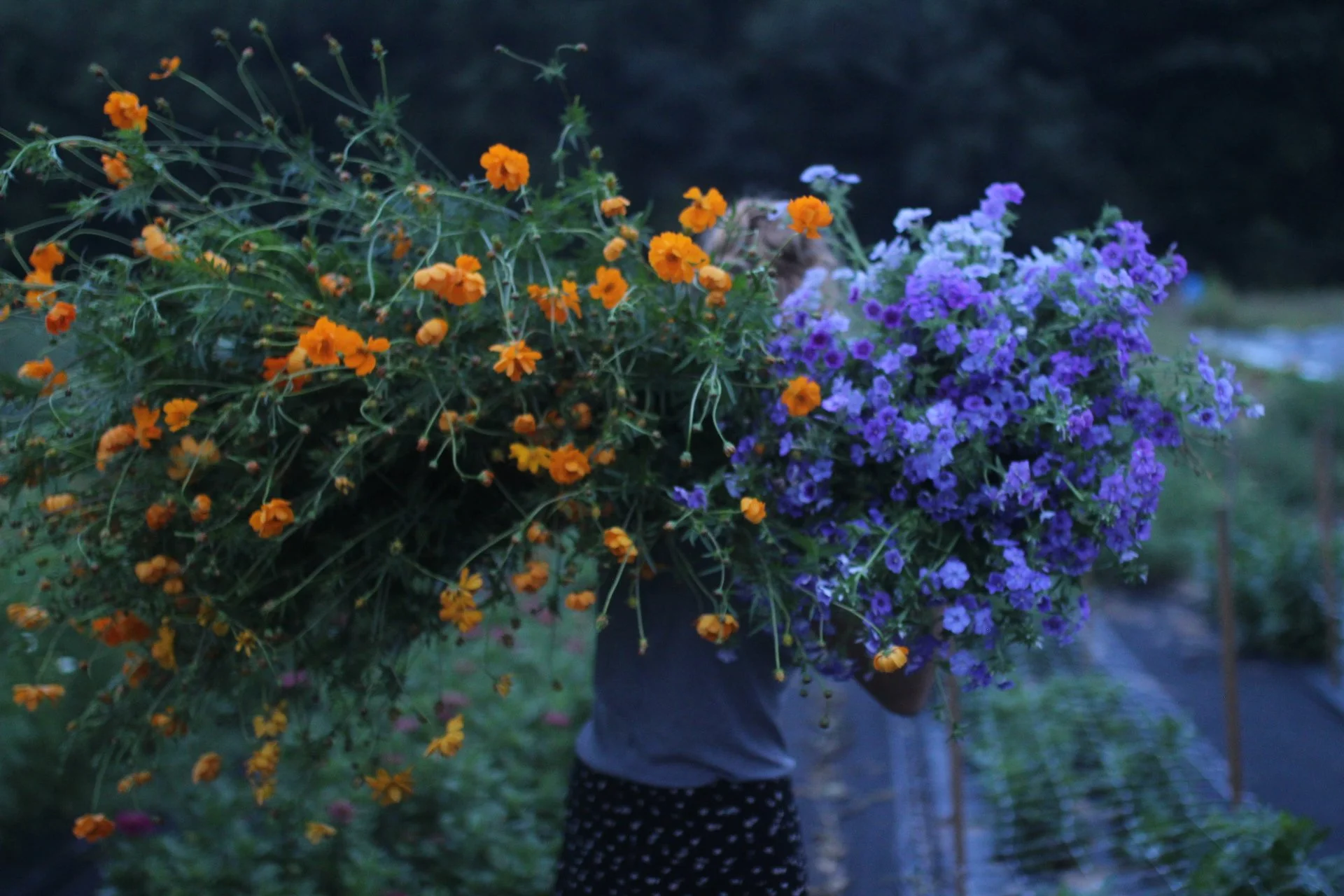
Cosmos & phlox- two fun, great crops!
I love floral wholesale - for my business, it is the most efficient & fun sales channel. Each year, I scale back on my other sales channels and focus more energy & product into floral wholesale. If you are producing quality cut flowers and want to get into wholesale markets- keep reading!
Some useful questions to think through:
1.Who is your market?
Do you live in an area with enough florists to support your wholesale program- do they even want to buy local flowers? I live about 30 minutes away from Boston- and there are tons of incredible, talented florists who value local flowers- both ethically and aesthetically. A lot of them are already familiar with obscure varieties I may grow, and there is a demand for unique, hard to find cut flowers. IF there was a floral cooperative near me, I would 100% join that. But unfortunately there is no coop close to me in North Shore MA. So I wholesale solo!
2. Are you familiar with wholesale cut flower industry standards?
Before I started selling wholesale, and even now, I’ll go to my local wholesale market and walk around. It was a great way for me to learn about expectations surrounding wholesale flowers. What did ranunculus at the floral market look like, were mine comparable enough to charge a similar rate? What did their snapdragons look like? At what stage of harvest were flowers like sweet pea, anemone, and tulips sold at? One of my favorite resources: ‘Floral Standards for Collectives and Cooperatives’. One of the best investments I’ve made!
3.Are you growing flowers florists want?
The best way to figure this out is to ask florists you are working with- what do they want to source locally? If they can get single early tulips for $0.5 at the wholesale market- why would they want to buy them from me, who can barely even purchase the bulbs at that cost? BUT- what flowers do florists have trouble sourcing from the wholesale market? Can I grow any of these profitably? There isn’t much point in competing with flowers that are easy and cheap to source from the international wholesale market. But it is worth exploring what flowers can be cumbersome to source via standard wholesale, and see where you can fill in the gaps!
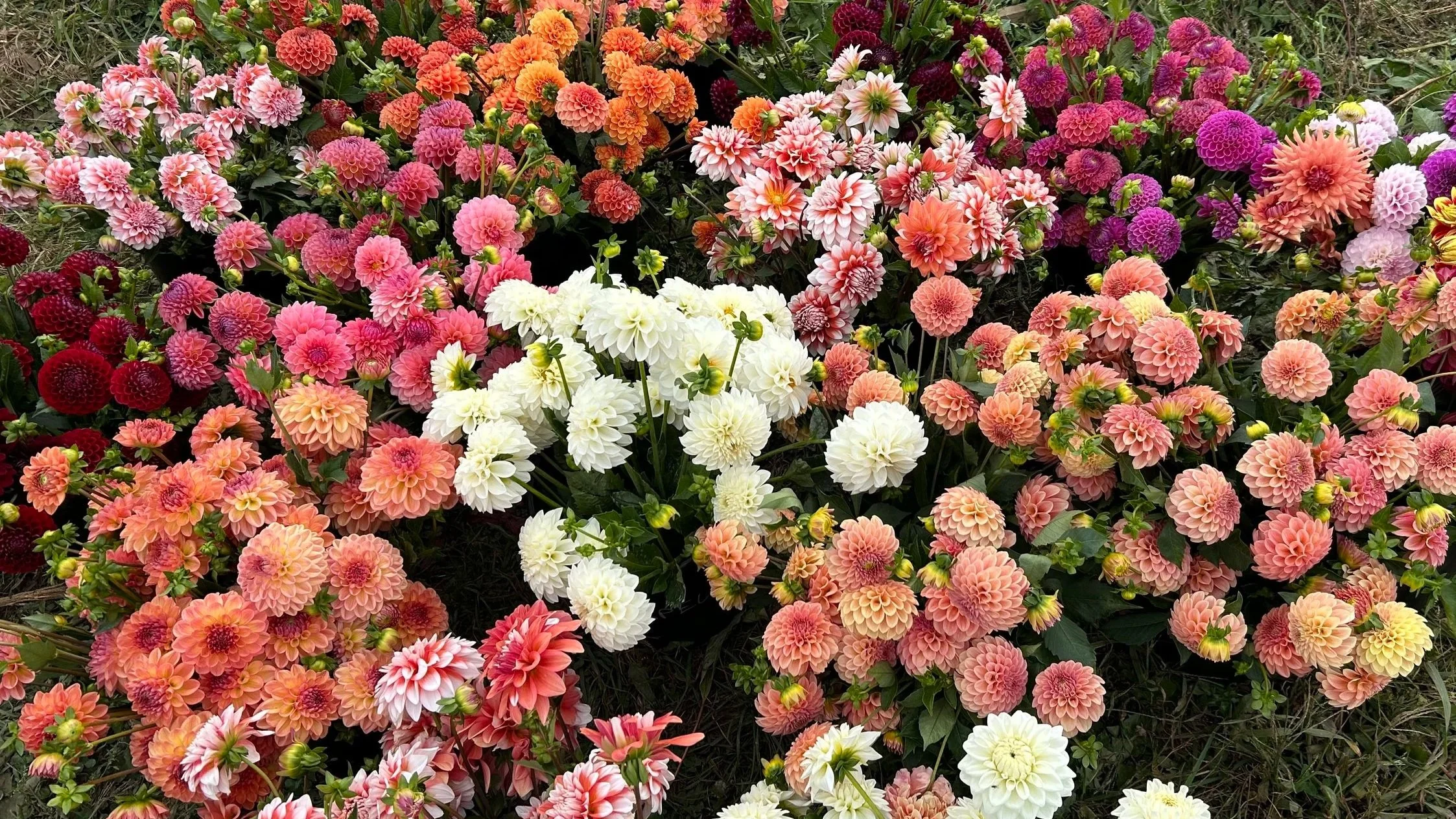
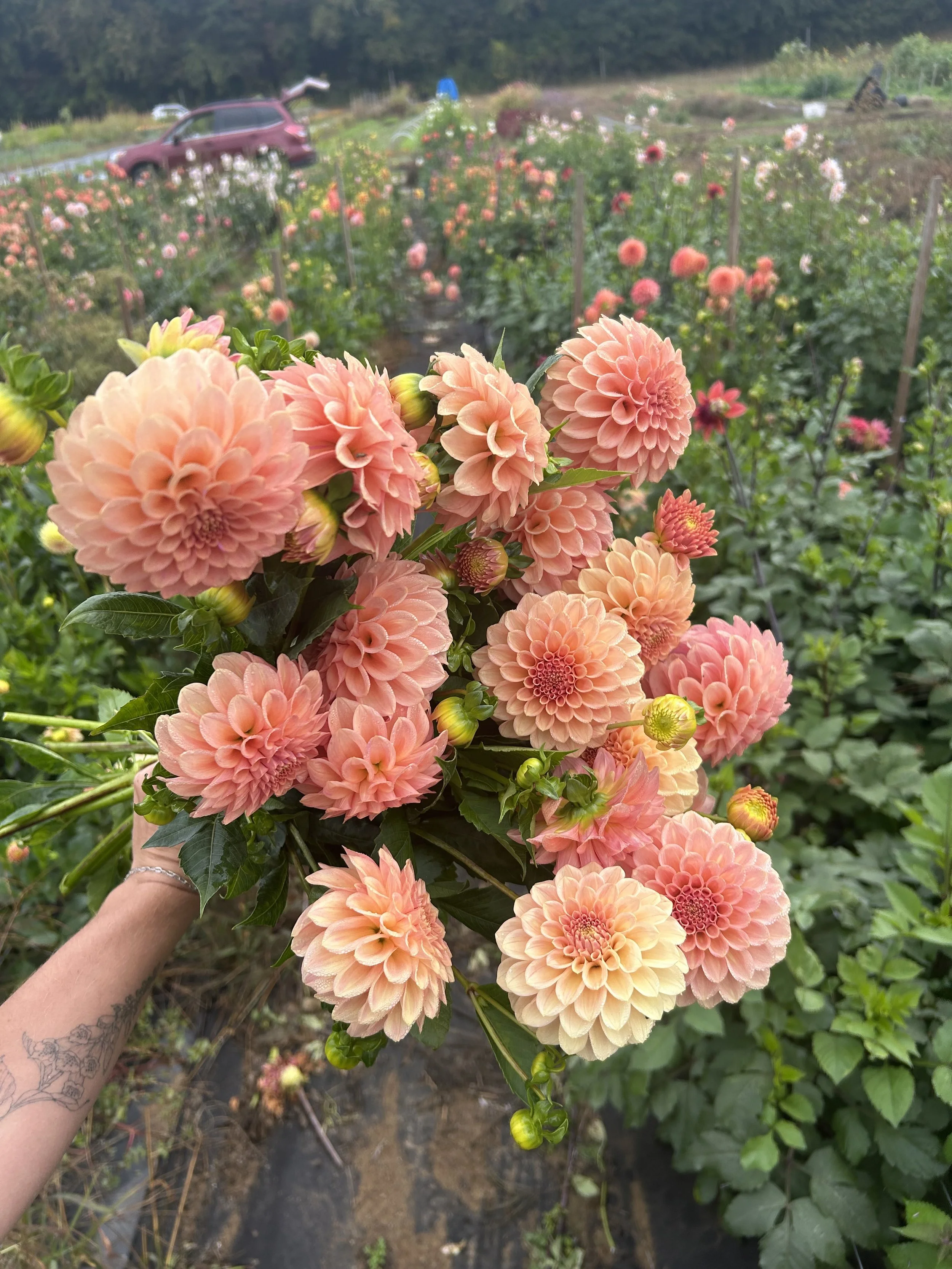
Dahlias! Beautiful and big $$$
How my Wholesale Model works:
I count out what I’ll have available in the next week or two at my farm.
Honestly, this takes a lot of practice. As you grow the same crops year after year, you’ll get an eye for when exactly xyz crop will be ready, and the quantity of stems that will be available in a given week. If you’re unsure, just aim for what’ll be available in the next week. I put this into a spreadsheet, along with its price, stem length, and any useful notes, and I send out a weekly wholesale list to my florist email list. And I include a LOT of pictures! People want to see what things look like- not everyone knows what Salpiglossis ‘Gloomy Rival’ looks like- but a few pictures can tell a thousand words.
I document what is growing- aka PICTURES!
I post obnoxiously on instagram. TBH I love every minute of it- but showing pictures and small videos of your crops really can communicate what your field is producing. The quality, the specific colors, the movement and shape something has- super useful info for a florist planning out event florals.
Wholesale Harvesting
As orders come in, I harvest on a first come, first serve basis. A lot of orders come in early in the week for a Wednesday or Thursday pickup/delivery day. I do the bulk of my harvesting on Tuesday, condition flowers in Chrysal hydrating solution, and let them hydrate in the walk-in cooler overnight. Then most pickups, and occasionally when I run deliveries into the city, happen on Wednesday.
And final thoughts on wholesale tips-
Stuff happens. I had my 2025 campanula crop destroyed overnight by deer, I had to reach out to florists to tell them sorry! No campanula. Not fun, but you have to be resilient and move on. I was harvesting some amaranth on a hot August day and moving as quickly as I could to get out of the heat. After picking up her order, a florist let me know the amaranth was covered with aphids. A bit embarrassing, but for my floral wholesale I want long term, successful relationships for all of us, so when a quality issue comes up I am glad for florists to let me know so I can address the problem and we can keep working together. Failure is the best teacher!
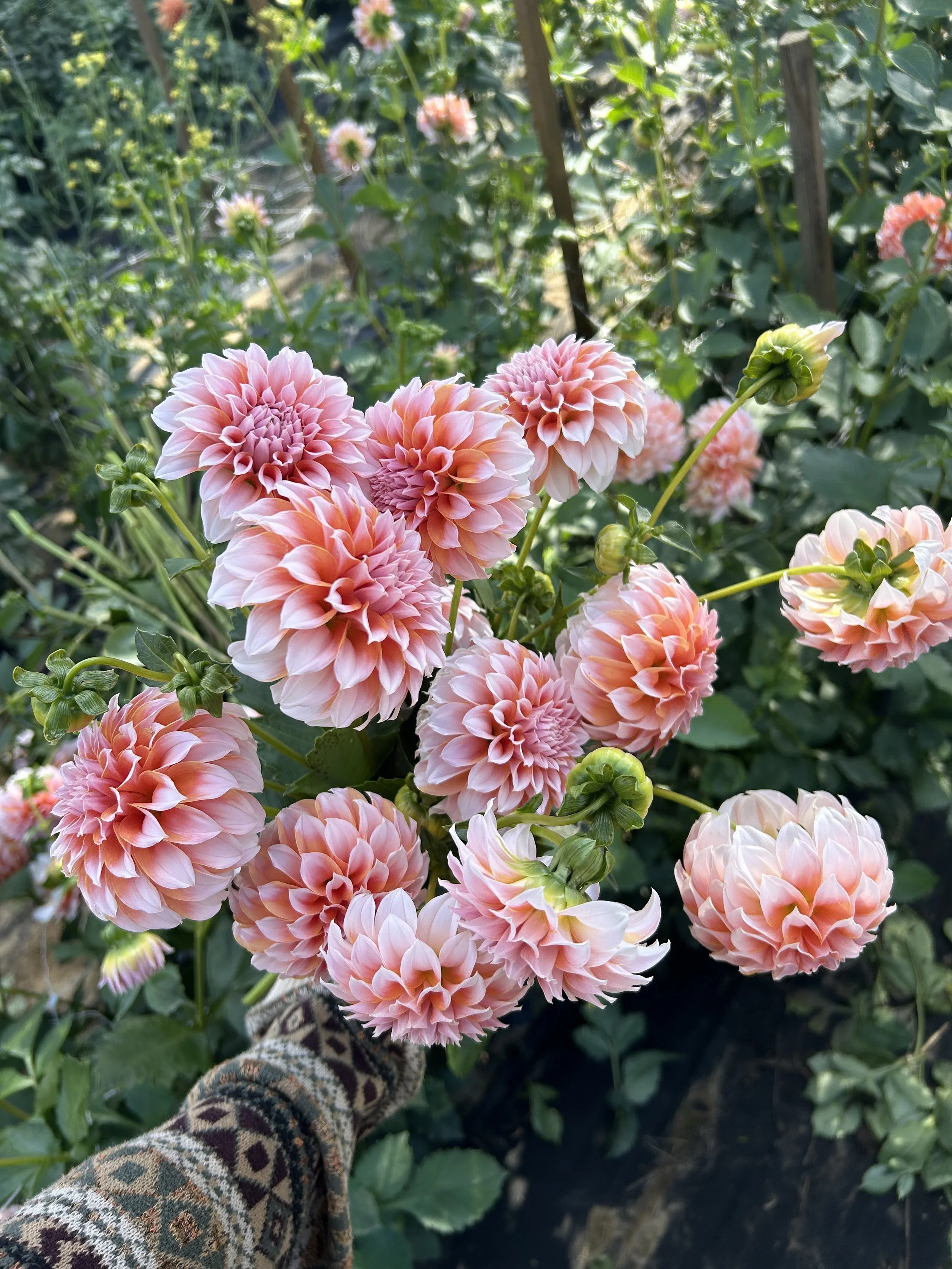
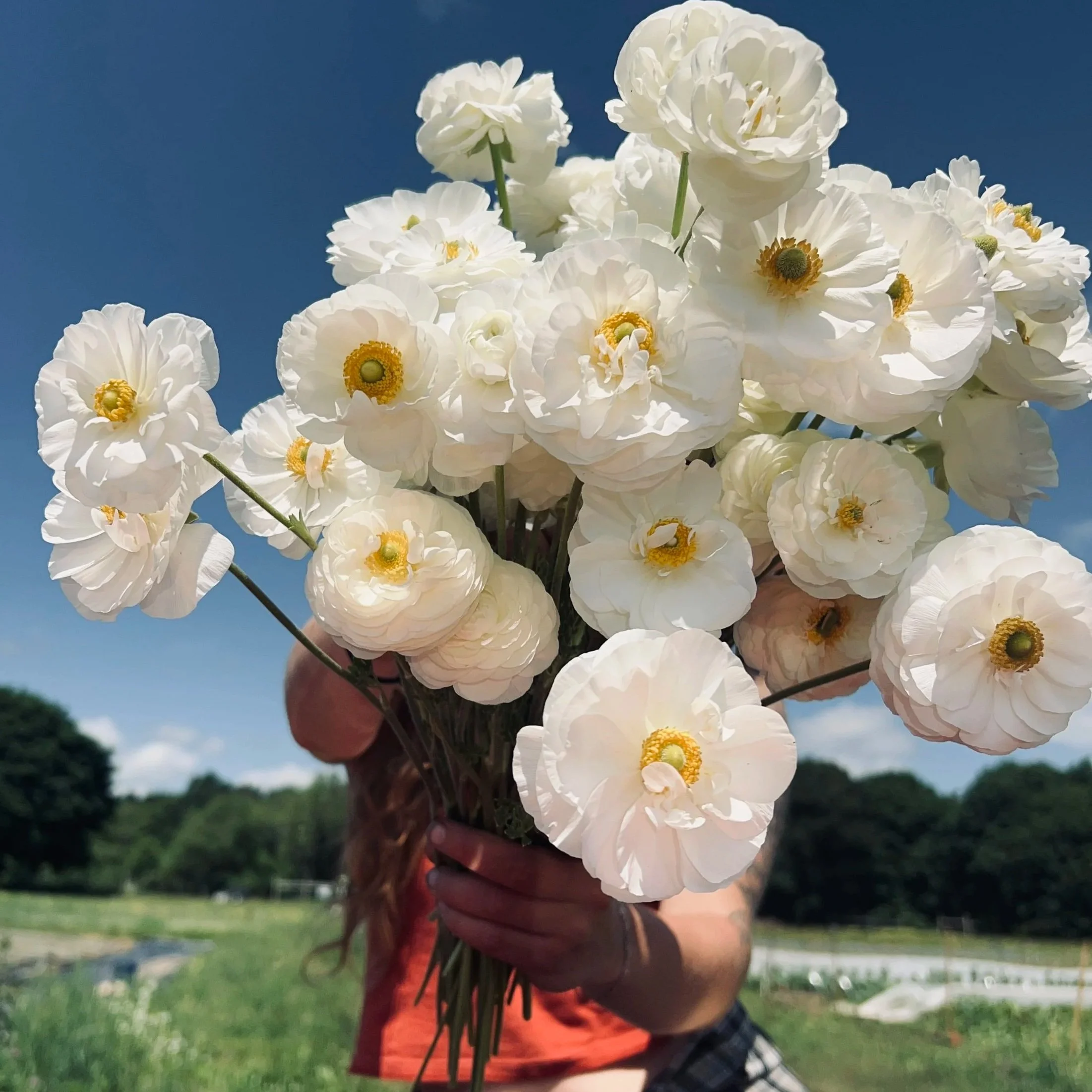
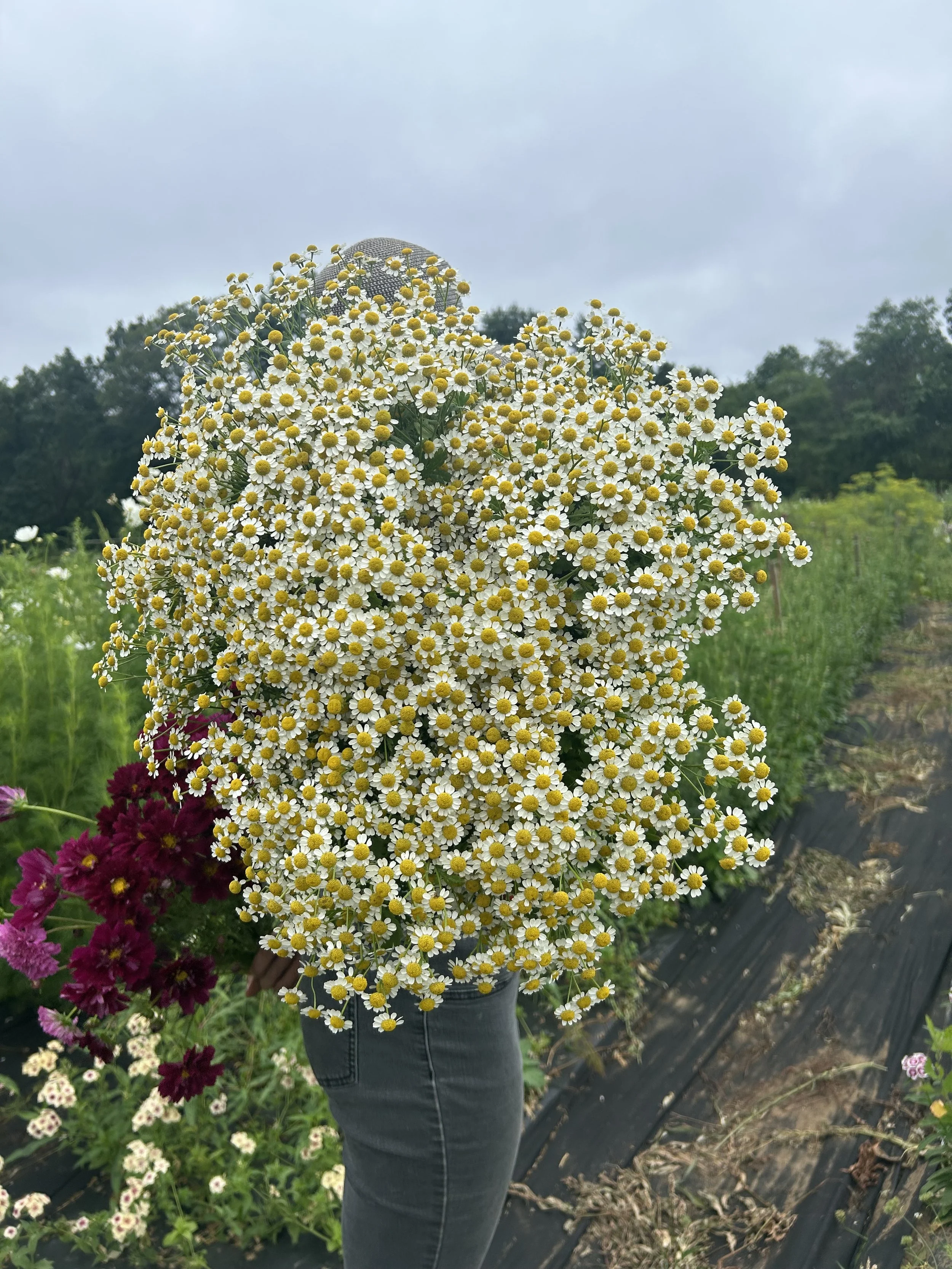
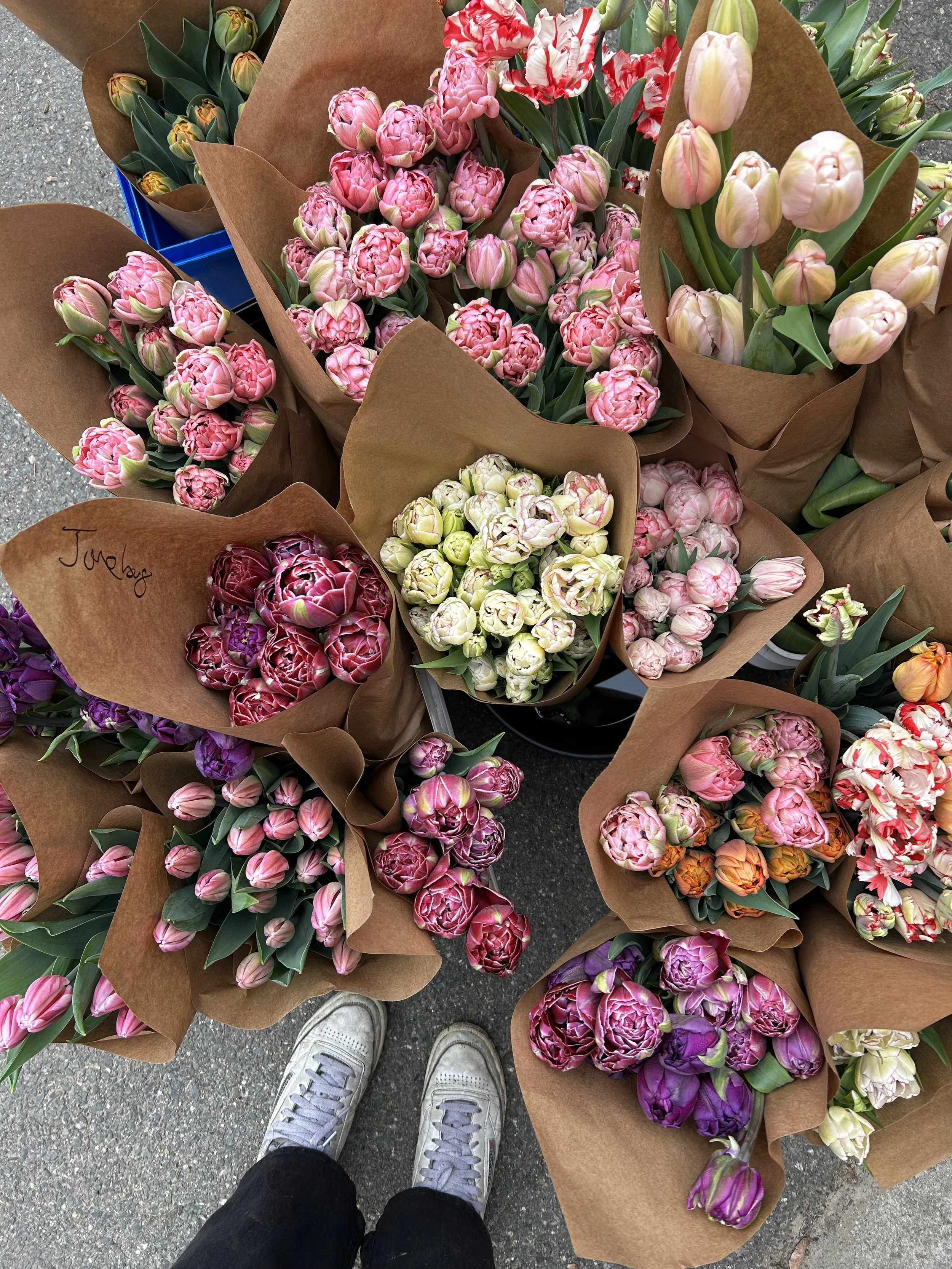
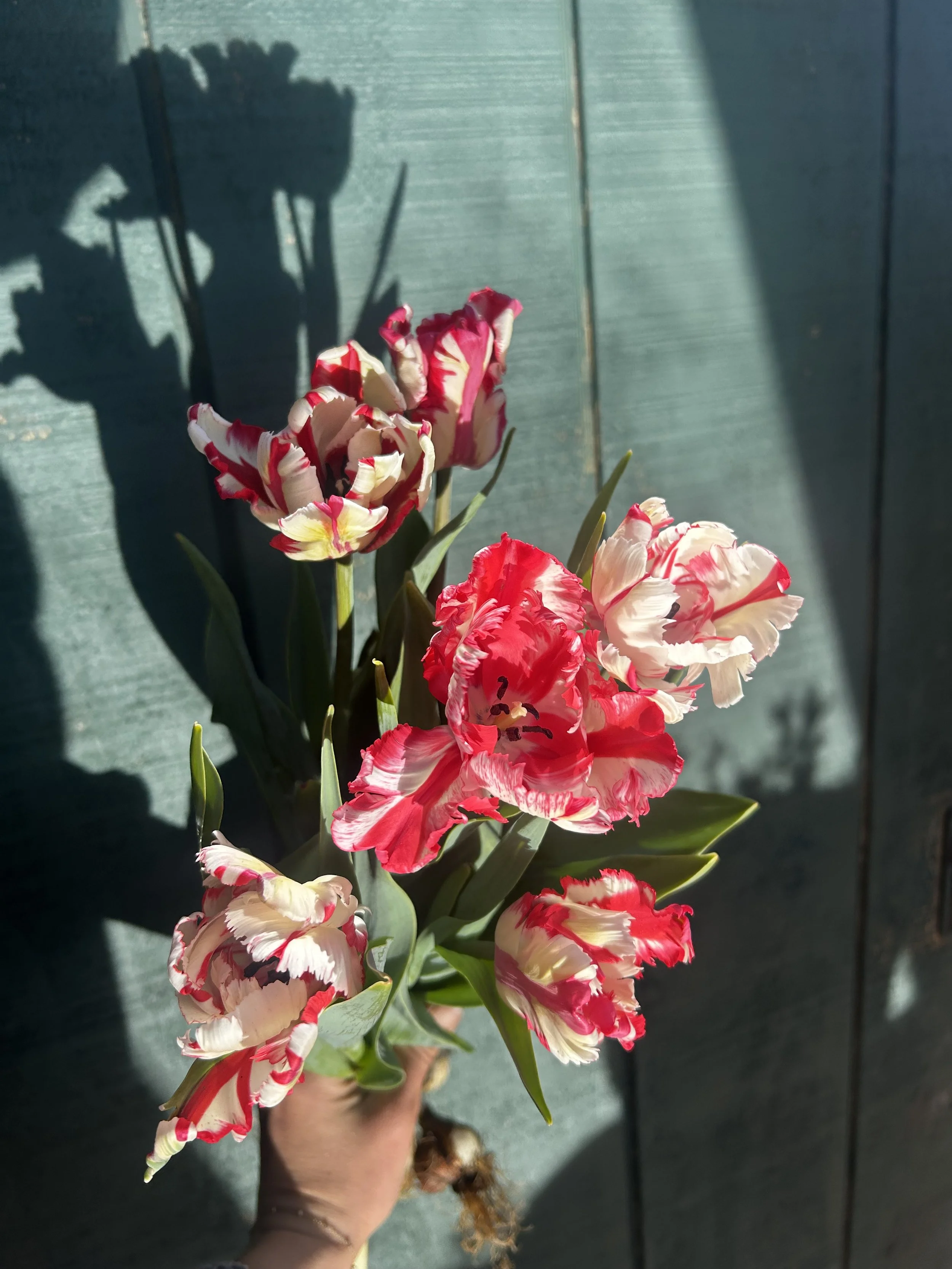
Most successful flowers in my Wholesale Program:
The following crops are flowers that are in high demand, either hard to source or not of high quality at standard wholesale outlets, and are easy to grow.
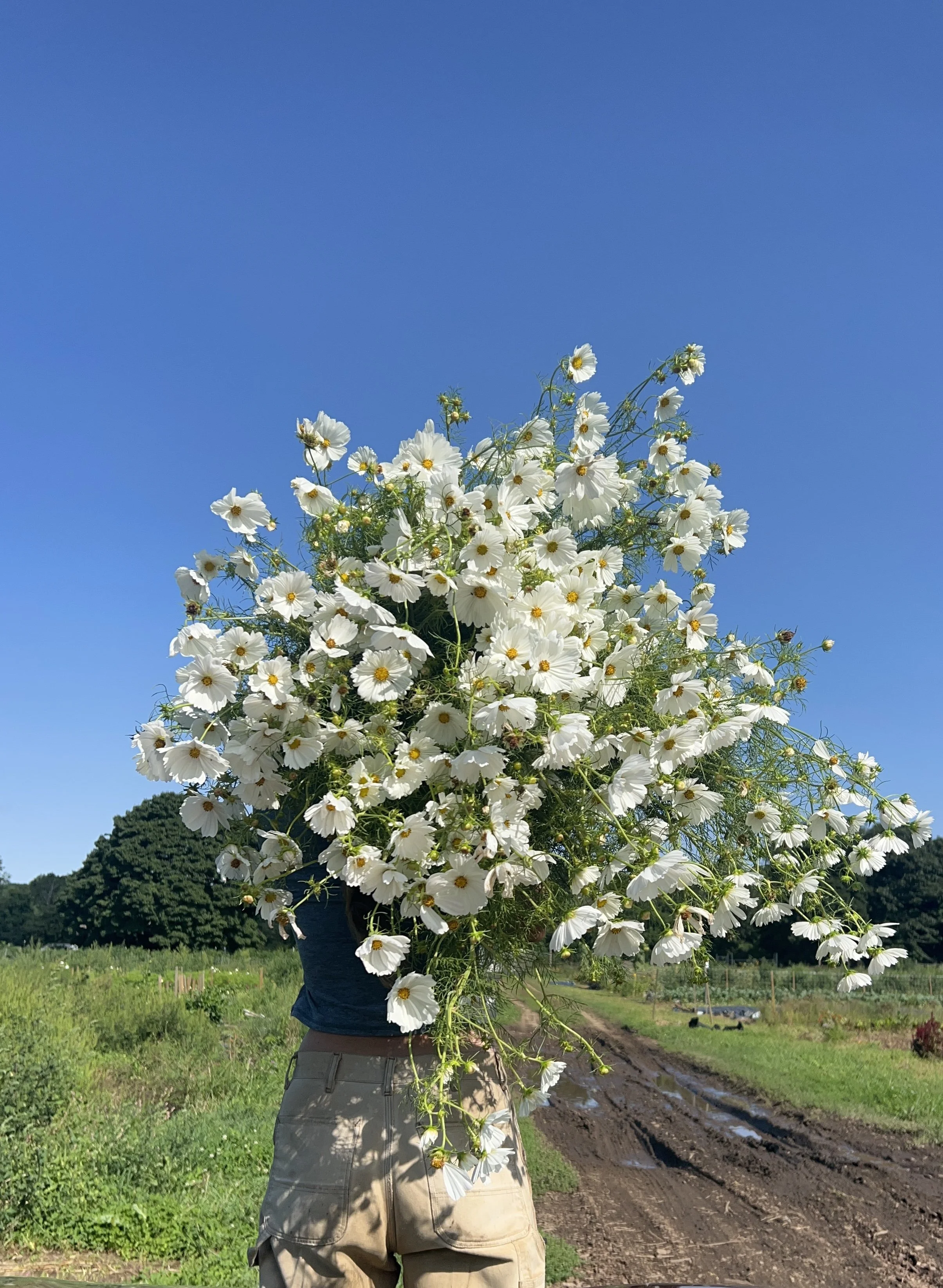
Cosmos
Cosmos are incredibly easy to grow, prolific, and are fun additions to event work. I particularly like the ‘Versailles’ series, and ‘Afternoon White.’
Annual phlox
Cute, a great range of colors, and perfect for design work. The only downside is they can have short stems, but they’re great besides that. ‘Cherry Caramel,’ ‘Blushing Bride,’ and ‘Isabellina’ are all popular.
Lisianthus
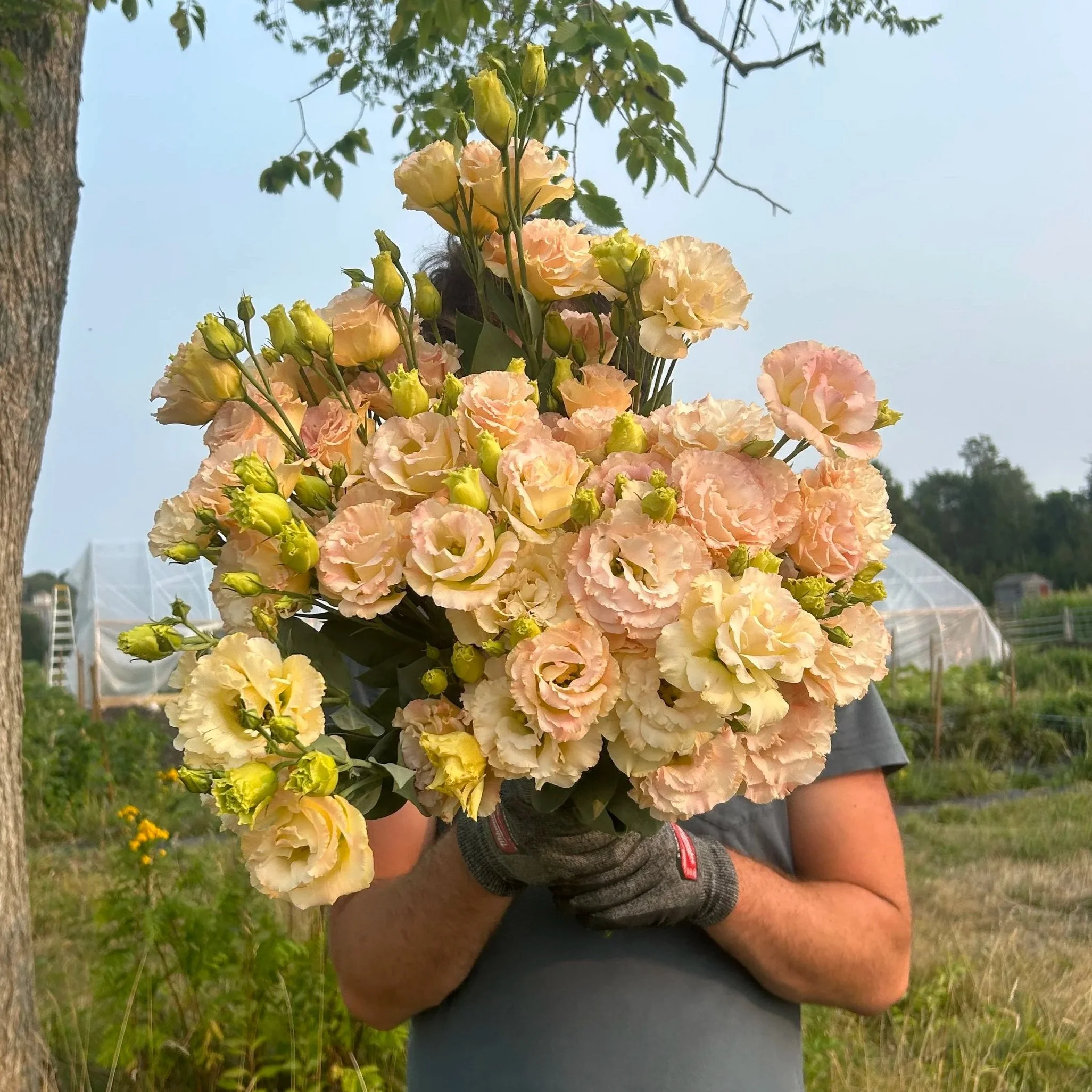
I’ve had numerous florists mention that local lisianthus is far superior to standard market lisianthus. Few flowers are as impressive as a lush, healthy crop of lisianthus. There are tons of varieties to choose from- the ‘Elegance’ series is my all time favorite.
Dahlias
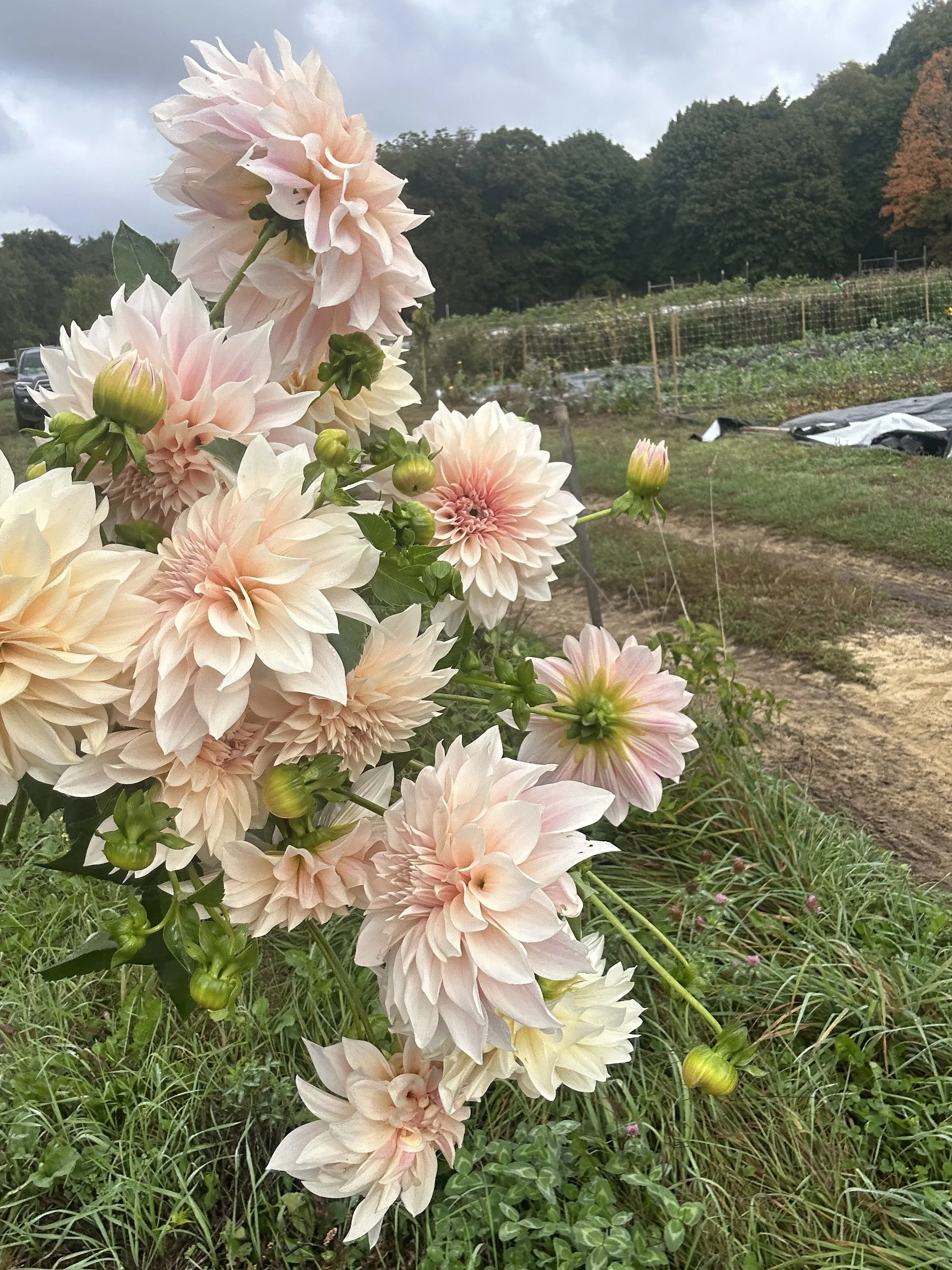
A high value, prolific, and highly sought after crop. Their short vase life and aversion to shipping/handling means local product is preferred. I’ve had a lot of wholesale clients come into my wholesale program for dahlia season, and slowly start expanding to source other flowers from me. White, blush, and peach dahlias are most popular for wedding design.
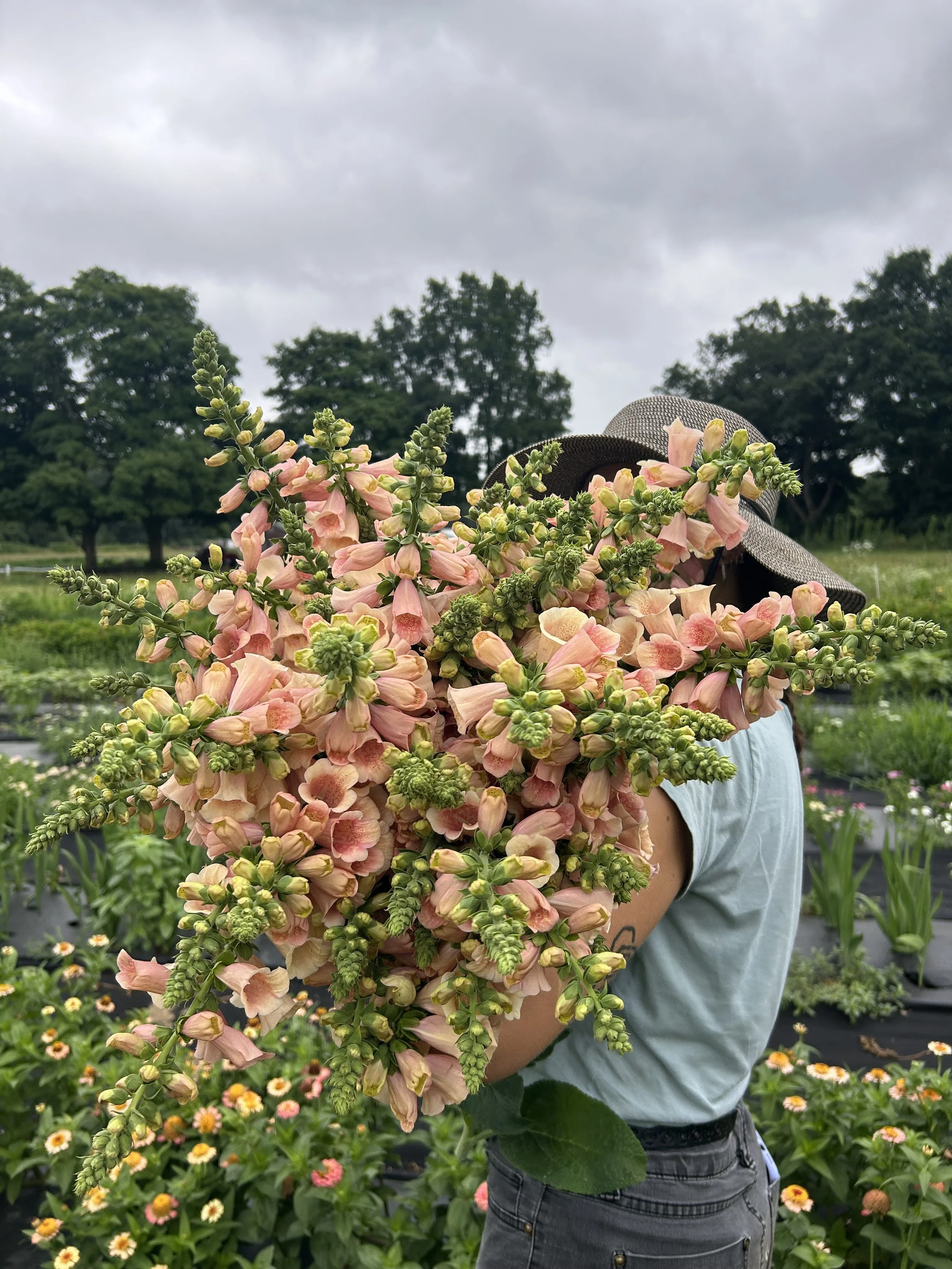
Foxglove
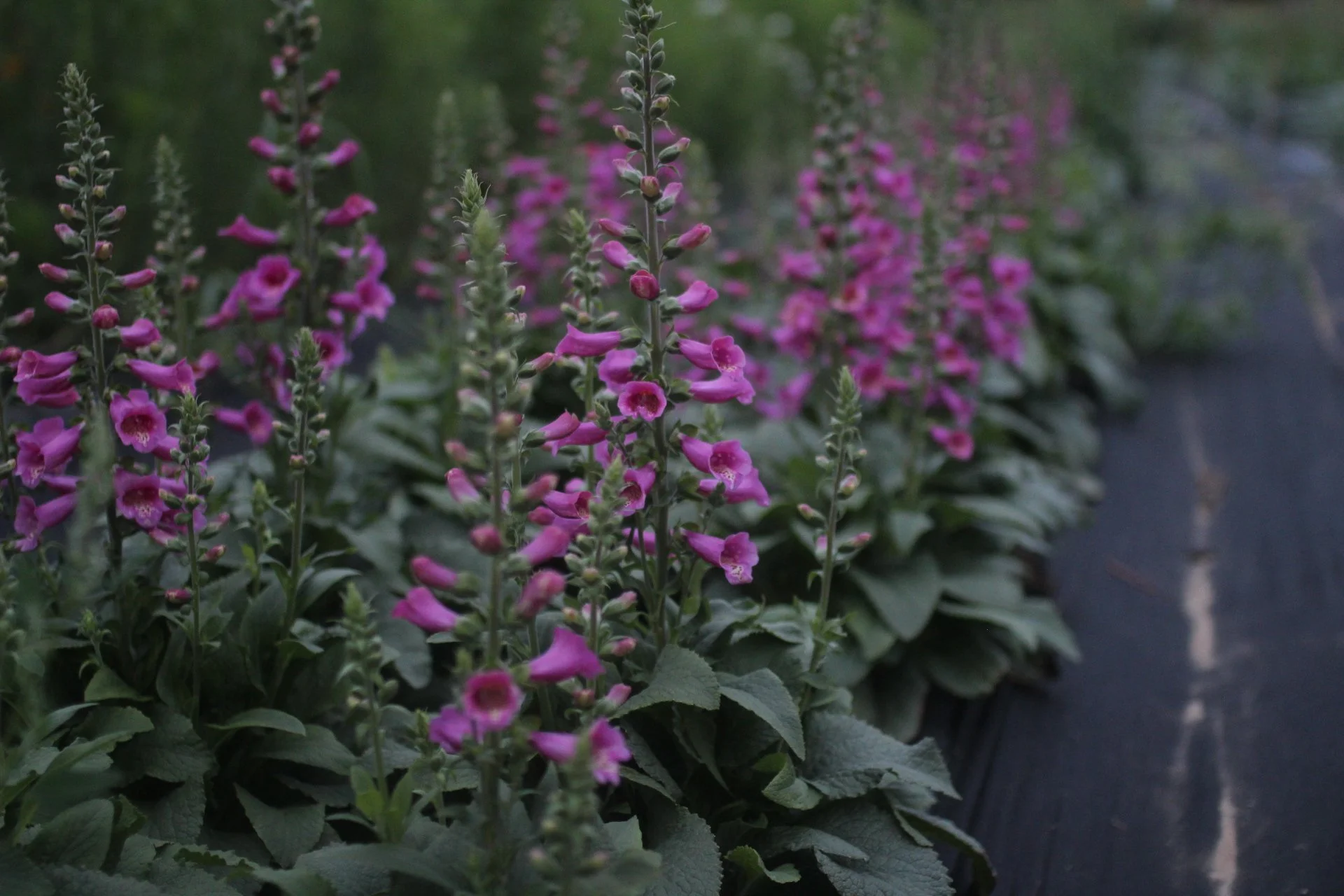
Foxglove are stunning, and a big seller for me! Order some plugs, put them in the ground, and watch them go! Peach and lavender from the ‘Camelot’ and ‘Dalmation’ series are easy to grow, bloom in their first year, and popular for design work. Specialty biannual foxgloves take a bit more work and time, but reward you with HUGE spires that are perfect for larger installations.
Delphinium
The ‘Belladonna’ series is my favorite, specifically ‘Clivedan Beauty,’ But the taller delphiums are also great. They are a beautiful source of blue, and are healthy perennials up here in MA.
And honestly- so many others!
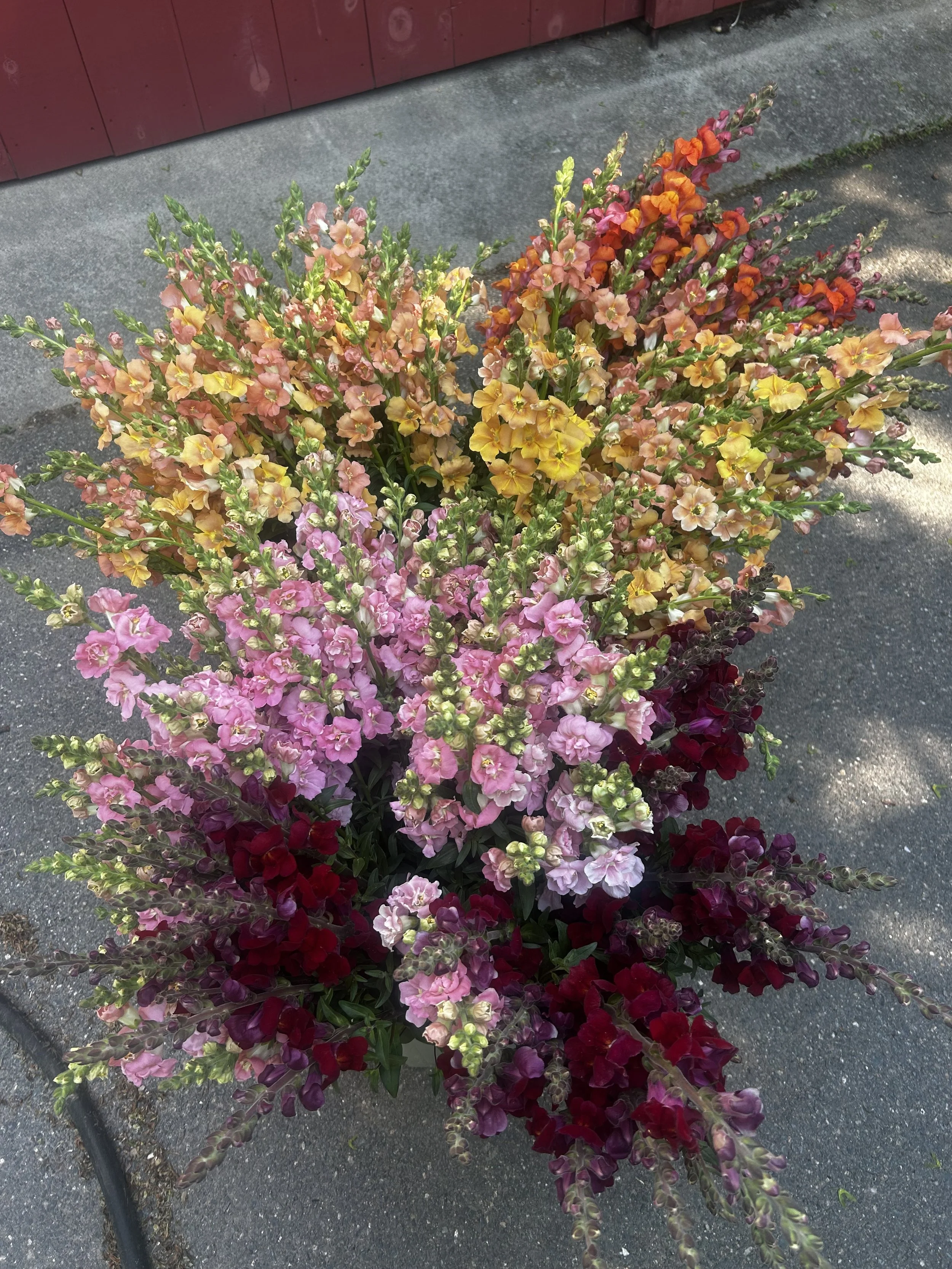
SO MANY cut flowers are incredible crops to add into your wholesale program. Not listed above- peonies, ranunuclus, snapdragons, orlaya, campanula, various types of foliage, etc etc.
